
Financial Strategy
Sustainability
Approach
External Environment
The role of finance in addressing diverse social issues, including climate change, and in realizing a sustainable society is increasingly recognized as critical. Sustainable finance, where financial institutions and investors make investment decisions based not only on corporate performance but also on ESG (Environmental, Social, and Governance) perspectives, has been expanding. This creates a flow of funds to tackle ESG challenges. Joint public and private efforts are underway to further accelerate this trend.
The promotion of sustainable finance requires enhanced information disclosure by companies raising funds. For listed companies and those issuing public bonds, the disclosure of sustainability information in their securities reports is now mandatory.
Current Situation and Challenges
The Company issued green bonds in 2020. The use of funds is strictly limited to the purchase of new hybrid, electric, and fuel cell vehicles that meet the Green Eligibility Criteria. In addition to providing these vehicles with high environmental performance to customers as leased vehicles, the Company supports the reduction of CO2 emissions during driving through comprehensive and continuous initiatives, including promoting eco-driving, performing proper maintenance, and using low-fuel-consumption tires.
In 2021, the Company issued sustainability bonds aimed at both environmental improvement and social contribution, adding funds for the purchase of in-vehicle devices for the mobility service SMAS-Smart Connect as an eligible use. The Company's services using these in-vehicle devices support safe driving for customers and contribute to realizing a safe and secure society for the movement of people and goods.
The Company continues to issue these ESG bonds, and with each issuance, it receives investment statements from many investors. These statements represent a public declaration by the investors of their support for the Company's initiatives and their purchase of the bonds.
While issuing ESG bonds involves burdens such as obtaining third-party evaluations, verifying the use of funds, and regular reporting, the resulting high recognition from investors helps promote sustainable management by securing long-term stable funding and enhancing trust in the Company's management.
Looking Ahead
The momentum behind the promotion of sustainable finance is expected to continue. International standards for disclosure and evaluation are constantly evolving, and new financing methods are emerging. It is therefore crucial to stay abreast of the latest developments, ensure appropriate disclosure, and thereby retain the trust of financial institutions and investors. The Company also aims to research new financing methods and adopt those that can be effectively utilized.
To achieve sustainable growth, a resilient financial foundation that remains stable even during periods of market instability is essential. This enables the Company to continue its initiatives toward the SDGs without interrupting investment. The Company will continue to employ a conservative funding strategy, focusing on long-term, fixed-rate funding. Furthermore, by diversifying funding sources, securing sufficient liquidity, and managing its debt maturity profile, the Company will work to mitigate financial risks and strengthen the foundation that supports sustainable business expansion.
Interview with the Head in charge of Finance
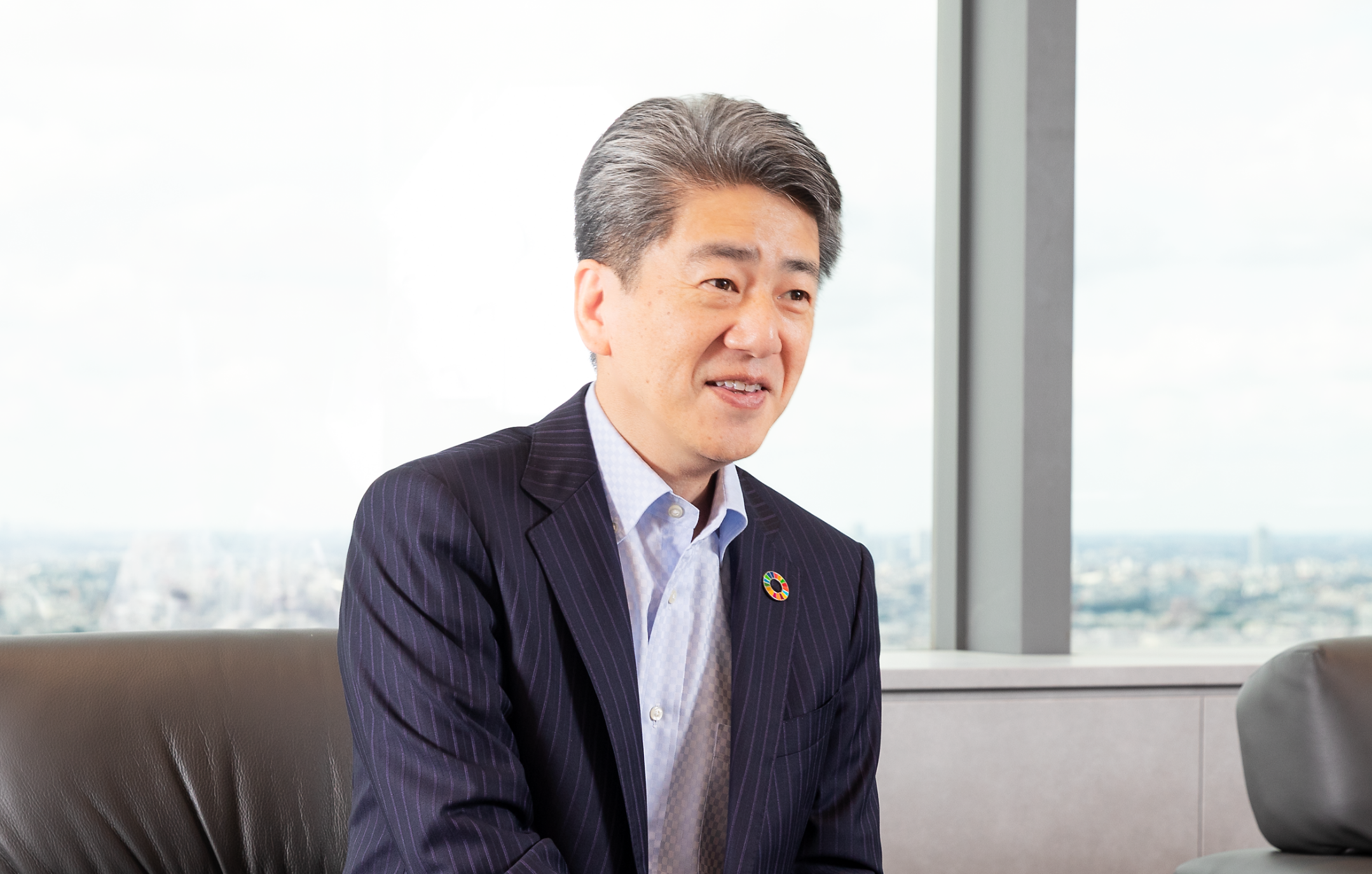
Toward Realizing a New Automotive Society
Supporting Sustainable Growth with a Solid Financial Foundation
Atsushi Tachibana
Managing Executive Officer, Manager in charge of Head Office (Responsible for Accounting Dept. and Finance Dept.)
Read the Interview with the Head in charge of Finance
A Safety-Oriented Financing Framework for Financial Risk Mitigation
In sustainable management, the finance department's role is to maintain the flow of funds and build a solid foundation that supports sustainable growth and stable operations. Central to this is a safety-oriented approach to financing. The Company has primarily utilized long-term, fixed-rate funding, which mitigates interest rate fluctuation risk and ensures dependable access to capital. Although the Bank of Japan (BOJ) has been normalizing monetary policy, leading to a rapid rise in market interest rates, the Company's funding costs have increased only moderately, thereby mitigating the impact.
While the BOJ is expected to continue raising policy rates, growing global economic uncertainty due to US tariff policies is increasing market volatility. In this environment, it is crucial to rigorously implement Asset Liability Management (ALM) by matching the tenors of our borrowings to the maturity profile of our operating assets (primarily automotive leases). Under the overarching policy of business domain expansion, the Company's business is growing through group companies. The Company centralizes financing based on the Group's overall operating assets and provides intra-group funding, thereby achieving ALM on a consolidated basis and effectively monitoring risk.
Furthermore, we minimize liquidity risk through measures such as maintaining sufficient overdraft and commitment line facilities, diversifying our banking relationships across approximately 70 institutions nationwide, and staggering our repayment and refinancing schedules. We also place great importance on building strong, stable relationships with our financial partners. Some institutions have developed strategic, multi-faceted relationships with us, which include not only regular communication but also collaborative business initiatives like expanding the auto lease business. We recognize that these robust relationships, which yield active support from a wide range of financial institutions, constitute a key strength that helps to mitigate our financial risk.
Working Together with Diverse Stakeholders to Realize a New Automotive Society
To diversify its funding sources, the Company began issuing public bonds in 2018; a first for the automotive leasing industry. The impetus for its green bonds came during investor roadshows for these bonds, where the Company received positive feedback that its initiatives to promote eco-friendly vehicles aligned with international Green Eligibility Criteria. This recognition prompted internal discussions, leading to the issuance of green bonds in 2020. Furthermore, recognizing that its SMAS-Smart Connect mobility service, co-developed with partner companies to reduce traffic accidents, delivers clear social benefits, the Company issued sustainability bonds in 2021, which included the purchase of in-vehicle devices for this service as an eligible use of proceeds.
These financing methods not only contribute to a safer and more eco-friendly automotive society but also enable investors to enjoy returns from investing bonds while simultaneously demonstrating their contribution to environmental and social goals through investment statements. For the Company, this approach has enabled it to garner broad support from investors who share its commitment to sustainability. Starting in 2024, the sustainability bond program has been expanded to include certain subsidiaries, promoting sustainability across the entire Group.
Through sustainable management, SMAS aims to evolve the automotive business by collaborating with stakeholders across the automotive leasing and manufacturing industries, financial institutions, and investors, all to enhance its social contribution. Moving forward, the Company will continue to support EV promotion and related business initiatives from a financial perspective, aiming to realize a new automotive society.